
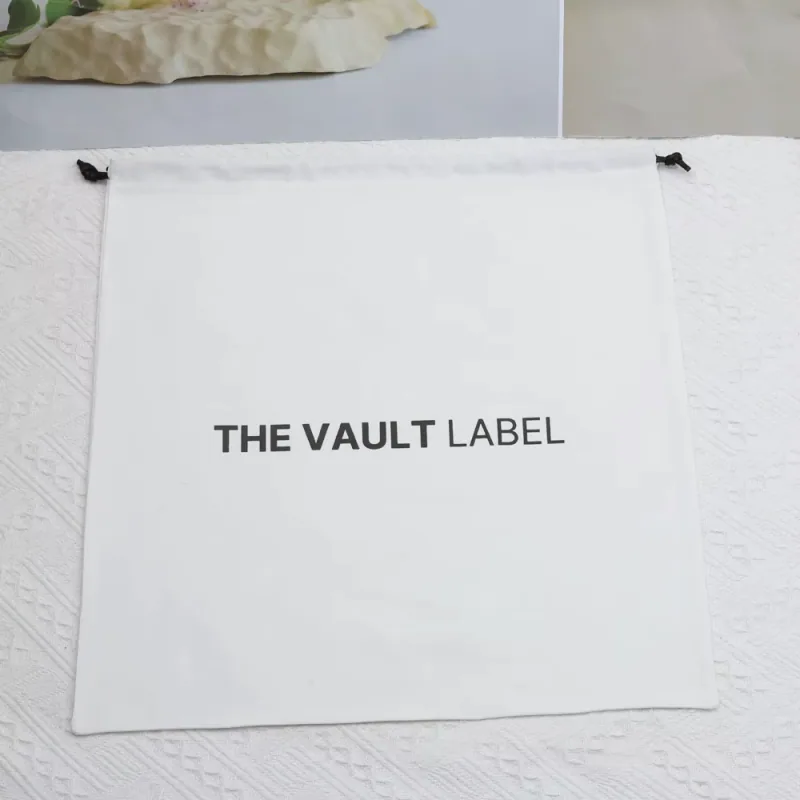
Cotton and canvas are not mutually exclusive materials: cotton is a fiber, while canvas describes a fabric category that can be made with cotton. For most pouch projects, the useful comparison is a lighter cotton fabric versus a more substantial cotton canvas, each with an identified weave, weight and finish. The better choice depends on how the pouch should drape, gather, display its logo and fit its contents.
Avoid selecting from the names alone. Two fabrics both sold as cotton canvas can produce noticeably different pouches, while a light and a heavy cotton fabric can share the same fiber composition.
1. Separate fiber, construction, weight and finish
A purchasing brief should answer four different questions: what fibers are present, how the fabric is constructed, how much it weighs per square meter, and what finish gives it its final surface and feel. CottonWorks explains plain, twill and satin as different woven structures. That distinction is separate from whether the yarn contains cotton. CottonWorks woven fabric designs.
For this comparison, “lighter cotton” means a proposed plain-weave cotton fabric, while “cotton canvas” means a proposed heavier canvas construction with its actual specification confirmed. Neither term is a technical guarantee of strength, opacity or softness.
A manufacturer specification illustrates the level of detail to request: NBT lists cotton content, plain or basket construction, weight and finish choices separately for its canvas fabrics. Those are its own supply specifications, not WisePouch stock claims. NBT cotton canvas.
Ask for an identified swatch rather than approving “natural cotton” by email. Natural is a color description in many conversations; it does not establish organic sourcing, an untreated finish or certification.
2. Compare two complete pouch concepts
The following weights and dimensions are illustrative sampling choices, not fixed categories, stocked materials or tested performance. Flat sizes mean empty finished outer W × total H, including the drawstring channel. Inches are approximate at 1 in = 2.54 cm.
| Decision | Lighter cotton concept | Cotton canvas concept |
|---|---|---|
| Initial fabric brief | 100% cotton, plain weave, 140–180 GSM | Cotton canvas, composition confirmed, 240–280 GSM |
| Sample size | 18 × 24 cm / 7.1 × 9.4 in | 18 × 24 cm / 7.1 × 9.4 in |
| Intended visual direction | Softer gathered presentation | More substantial body presentation |
| Closure trial | Cotton cord, proposed 3 mm | Cotton cord, proposed 4 mm |
| Logo comparison | Screen print and printed label | Screen print and woven label |
| Main sample question | Does the filled pouch look too loose or transparent? | Does the mouth gather comfortably? |
These visual directions are development aims, not guaranteed outcomes. Compare the actual samples empty, filled and closed under the same light. A stiff finish can change the behavior of a lighter fabric; a softer finish can change expectations about a heavier one.
3. Adjust dimensions when the fabric changes
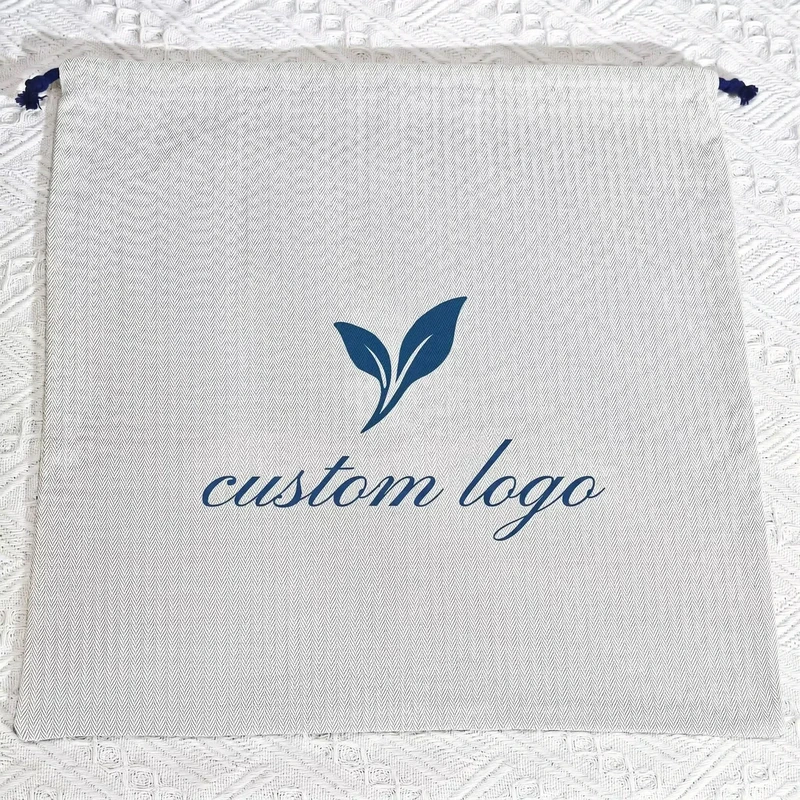
Switching fabric while keeping the same outer dimensions can change usable space and closing behavior. The finished side seam, turned corners and gathered top are all part of the fit. A thick or stiff construction may need a revised channel or a different amount of gathering space.
For a rigid rectangular object, a quick flat-pouch width check can begin with object width + object depth + trial ease. It reflects the fact that the pouch must wrap around depth; it is not a sewing pattern or a guarantee of fit. The height also needs to accommodate the lower shape and leave room above the object to close.
If a product needs a defined base, consider a gusseted alternative. A proposed 18 × 24 × 5 cm body means outer W × total H × D, measured empty with the gusset open. It is a different construction from an 18 × 24 cm flat bag, so the two cannot be treated as equivalent capacities.
Use the intended lining, label and decoration in the final sample. Adding those after size approval can introduce stiffness or internal contact points that the earlier fitting never evaluated.
4. Work through a boxed-gift comparison
Suppose a gift box measures 12 cm wide, 15 cm tall and 4 cm deep, in its intended upright orientation. For a flat pouch, 12 + 4 = 16 cm provides a rough width envelope before useful ease. An 18 × 24 cm sample is a reasonable first comparison size, subject to the actual box and construction.
Make one lighter cotton version and one cotton canvas version around that brief. Place the same box in each. Check insertion first, then whether the front logo remains visible, and finally whether the top closes without pulling against the box corners. Keep the tissue or card that will accompany the box in both tests.
If the canvas version fits but gathers awkwardly, try adjusting the channel or upper height before widening the whole pouch. If the lighter version looks too loose around the box, evaluate its finish or a smaller body only after checking that easy removal is preserved.
Now remove the box and assess the empty pouch's proposed second use. A pouch intended for small accessories afterward should still open comfortably and fold into a practical size. This is a design decision to observe, not a promise that the customer will reuse it a particular number of times.
5. Select the logo and cord on the actual surface
Screen printing is worth evaluating when the artwork uses clear shapes or a limited color arrangement. Fabric texture can affect the edges of small lettering and fine details. Compare a real printed swatch at the intended size instead of judging only a digital mockup.
Heat transfer can be considered for suitable artwork and fabric combinations, with heat, pressure, appearance and adhesion checked on the sample. Embroidery adds stitch coverage and reverse-side backing; examine both sides, especially if the pouch touches a delicate product. A woven or printed label moves the brand mark to a separate component, but its placement and attachment still need review.
For the 18 × 24 cm example, compare a 5 cm wide main logo with a 7 cm wide version. These are artwork trials, not universal print limits. Assess them after closing the bag because gathering changes the visible front panel.
Likewise, a thicker cotton cord may visually suit canvas without being the best operating choice. Check the cord's diameter, braid, knot, channel clearance and pull length together. A smaller cord that operates well may be preferable to a larger one selected solely from appearance.
6. Decide by use, care and the complete quotation
Choose the lighter concept when the actual sample achieves the desired drape, folding bulk and presentation with sufficient fit. Choose the canvas concept when its body and surface better suit the product and brand, provided the opening and closure remain practical. There is no need to declare one fabric universally more premium.
Compare quotations using the same finished dimensions, quantity, decoration, labeling and packing. A price difference may come from finishing, lining, artwork complexity or minimum material purchasing conditions, not just GSM. Ask which specification would change if you need to reach a target budget.
If cleaning is part of the intended use, evaluate the decorated sample under the proposed care conditions. Cotton content alone does not establish final shrinkage, colorfastness or print durability. Record agreed size tolerances and the appearance requirements after any requested care evaluation.
Avoid making environmental comparisons from the material name alone. Composition, sourcing documentation, finishes, trims, production and actual reuse all matter to a specific claim. Describe verified material facts precisely and keep unsupported labels out of the final product copy.
Conclusion
The useful cotton-versus-canvas decision is a comparison between two specified fabrics in a working pouch. Choose the version that fits the product, closes comfortably and presents the intended branding. A clear swatch reference and an approved filled sample are more informative than choosing whichever material name sounds heavier or more luxurious.
Key Takeaways
- Cotton names a fiber; cotton canvas is one possible fabric choice.
- Specify composition, construction, GSM and finish separately.
- Recheck fit, channel operation and artwork when changing fabric.
- Compare complete quotations and verified care requirements.
Frequently Asked Questions
No. Ask for the actual composition rather than relying on the category name. This article compares lighter cotton with cotton canvas, but a supplier's canvas offering may contain other fibers or blends.
No. GSM measures mass per unit area. Strength depends on the fabric construction, yarns, finish, seams and intended loading. Assess the finished design against its intended use and agree appropriate verification where needed.
The surface and artwork matter more than the category name. Print the same design at its final size on both candidate fabrics, then compare fine lines, readability, color and appearance after gathering the pouch.
You can use it as a starting point, but sample again. Changes in body, seam bulk and gathering can affect loading and closure. A channel adjustment or gusset may be more useful than enlarging every dimension.
No. Color and bleaching status are separate from agricultural sourcing and certification. Request the precise material description and relevant documents for the actual supply if those requirements form part of the project.
Related Resources
- Fabric weight and GSM for pouches explains what fabric weight does and does not tell you.
- Satin versus cotton gift pouches compares two presentation directions.
- Custom gift pouches covers sizes, materials and branding options.
Send your product dimensions, preferred feel and logo artwork through Contact WisePouch to compare suitable fabric samples.
Share your product dimensions, intended use, preferred fabric, closure, logo artwork and estimated quantity. We can review the details needed for a quotation and sample.
Discuss Your Pouch Project