
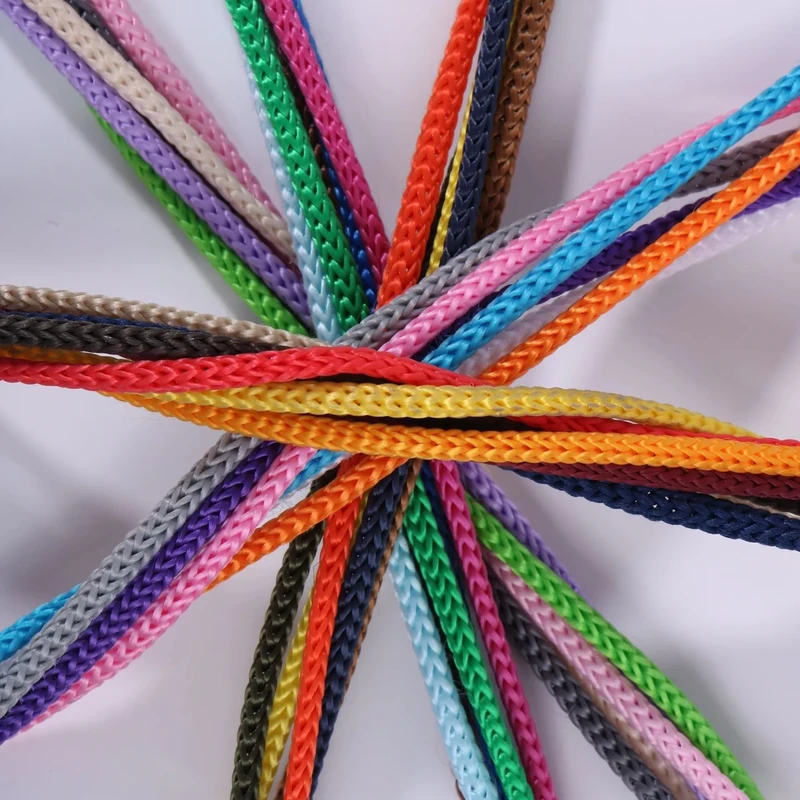
For a custom pouch, cotton cord is a useful starting point when a matte, textile feel matters; polyester cord is worth sampling when a smoother or more consistent trim appearance is desired; ribbon gives a flatter, more decorative closure. The correct choice still depends on the particular trim, pouch fabric and channel construction. Fiber name alone does not tell you how easily a closure will slide, how a knot will hold or how the bag can be cared for.
Treat the drawstring as a functional component. A beautiful swatch can make a poor closure if it twists, jams at the side seam or leaves an uncomfortable knot against the packed item. This guide explains which details to compare before approving material and dimensions.
Separate Fiber, Construction and Surface Finish
“Cotton,” “braided” and “satin” answer different questions. Cotton identifies a fiber. Braided describes a construction. Satin describes a weave or surface appearance and does not, by itself, mean silk. A satin ribbon can be made from polyester; a cotton-look cord may contain a different fiber or a blend. Ask for the stated composition rather than deciding from a photograph.
Marlow's rope manufacturing FAQ describes yarns being assembled through braiding or twisting. For packaging, the practical lesson is to compare both the material and the construction. A firm braid and a loosely twisted cord made from the same fiber can feel very different in a sewn channel. This guide does not transfer rope strength or service-life claims to pouch drawstrings.
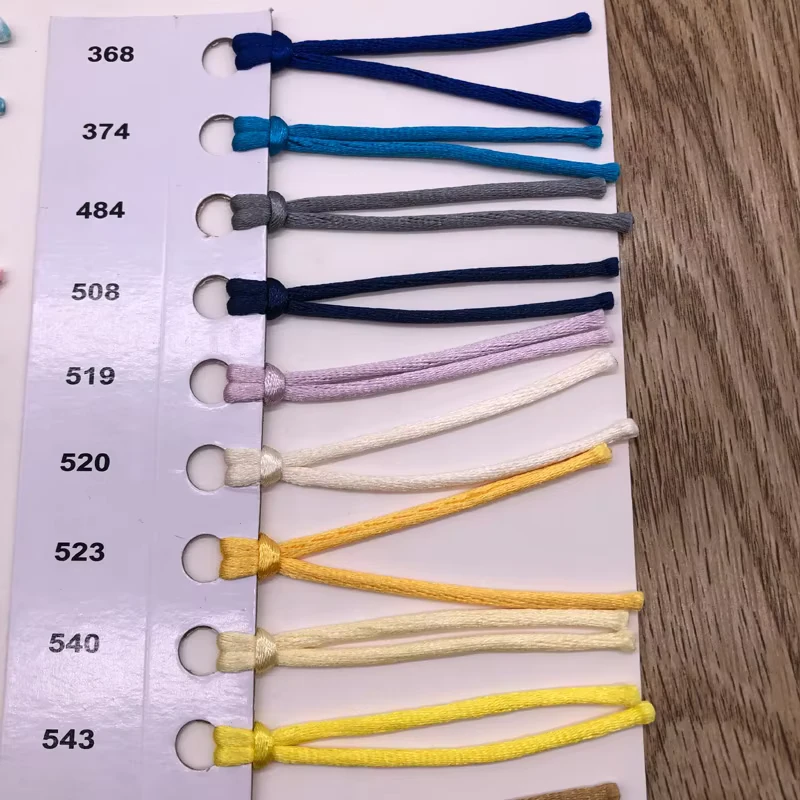
Also record whether the trim is round or flat, its nominal diameter or width, its surface sheen and its stiffness when bent. If there is an internal core, include that information when available. These details help explain why two apparently similar cords behave differently in an otherwise identical sample.
Compare Cotton Cord, Polyester Cord and Ribbon
Use the comparison to shortlist samples, then handle them. Cotton does not guarantee an untreated finish, polyester does not guarantee a glossy surface and ribbon does not guarantee an easy bow. Dyes, construction and finishing influence the result.
| Trim option | Useful appearance to explore | Question for the physical sample | Detail to record |
|---|---|---|---|
| Cotton cord | Matte, textile-led packaging | Does it slide smoothly without shedding visible fibers onto the product? | Composition, braid or twist, diameter and approved end finish |
| Polyester cord | Smooth or defined trim, depending on construction | Does the surface slip in the chosen knot or feel too firm against the pouch? | Composition, surface, diameter, color and knot behavior |
| Flat satin-style ribbon | Glossy presentation and visible bow | Does it remain flat, twist inside the channel or crease after tying? | Fiber, width, thickness, face/back appearance and end finish |
| Textured flat ribbon | More pronounced woven texture | Does texture add useful grip or excessive friction? | Fiber, weave, width and matching channel sample |
For a coordinated product line, compare the trim and pouch fabric under the same light. “Black” cord and “black” fabric can look different because their surfaces reflect light differently. Decide whether you want a deliberate contrast or a close visual match. A shared color name alone is not an approval standard.
Choose Diameter and Ribbon Width With the Channel
The dimensions in this table are illustrative sample starting points. They are not inventory sizes, industry standards, minimum feasible dimensions or load ratings. Pouch dimensions are empty finished outer width × total height, including the channel. Clear channel depth is the unobstructed internal distance between the upper fold and lower channel stitch line; it is not the cut width of the fabric strip.
| Proposed application and pouch | Trim candidates to compare | Clear channel depth trial | Main observation |
|---|---|---|---|
| 9 × 12 cm jewelry pouch | 1.5–2 mm round cord or 5–6 mm ribbon | 8–10 mm for cord; 10–12 mm for ribbon | Knot bulk and ability to reopen |
| 18 × 24 cm gift pouch | 2.5–3 mm cord or 8–10 mm ribbon | 12–15 mm for cord; 16–20 mm for ribbon | Smooth gathering and bow proportion |
| 35 × 40 cm handbag dust bag | 3–4 mm cord or 10–15 mm ribbon | 16–20 mm for cord; 22–28 mm for ribbon | Channel folding around the filled bag |
| 40 × 60 cm laundry pouch | 4–5 mm cord | 20–25 mm | Grip, exit reinforcement and agreed handling |
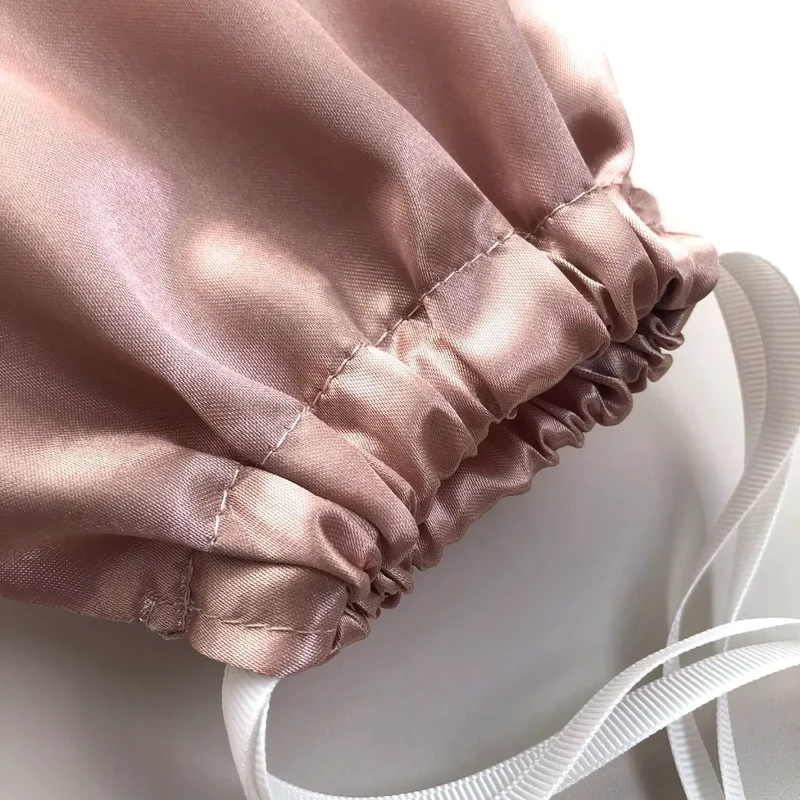
Start with the intended route. In a common double-pull construction, two separate cords each pass through front and back channels, so each channel contains two cord runs. Do not design the space around a single isolated strand. Ribbon also folds and overlaps as the mouth gathers; twice the ribbon width is not a universal channel formula.
Check the exit separately. A channel may have enough space along its length but a much tighter opening where a seam folds inward. Ask for an unobstructed exit and inspect it with the actual trim. If a knot or tip must prevent the end retracting, compare its finished size against that exit.
Build a Ribbon and Cord Comparison Sample
Consider a proposed 18 × 24 cm cotton gift pouch for a boxed accessory. Make one sample with approximately 3 mm cotton cord and another with 10 mm polyester satin-style ribbon. Keep the pouch fabric and main body dimensions consistent, but allow each trim its own channel trial: for example, 14 mm clear depth for the cord and 18 mm for the ribbon.
These choices are a controlled comparison, not finished engineering specifications. Pack the actual accessory and insert card. Close the pouch, set it on a counter and open it again. Observe how much of the product's upper edge sits below the channel, whether the ribbon twists and whether an ordinary user can release the closure without pulling hard on the fabric.
Try a proposed 60 × 25 mm logo with its lower edge 45 mm above the bottom seam. Photograph the packed pouch from the intended display angle. The ribbon bow may overlap a high logo placement; the cord may leave more of the front visible. Move the artwork only after evaluating that interaction, and record the accepted distance from a finished seam.
Finally, save one approved trim sample alongside the pouch. A later change from soft to firm ribbon, or from a loose to a tight braid, should be reviewed even if its nominal width or diameter is unchanged.
Decide Length, Knots and End Finishing Together
Specify the trim's route, fully open mouth and desired closed appearance before finalizing cut length. A short decorative tail, a tied bow and a long pull loop require different allowances. Knots and end treatments consume material too. Record the cut length from the proven prototype rather than applying a general multiplier to pouch width.
For knots, check both security and reopening. A join that slips during repeated operation needs revision, but a bulky knot that catches at the channel exit can also frustrate users. On a small pouch, the knot's visual size may dominate the entire package. Test with the product installed because exposed trim can fold back against the contents.
The finishing method must suit the actual fiber and trim. Do not prescribe heat sealing for an unspecified “cotton” cord, and do not assume every synthetic ribbon tolerates the same cutting process. Discuss clean, stable ends during sample development. Decorative tips, if feasible, should be assessed for appearance, attachment and interaction with the product.
If users will lift the bag by its drawstrings, define that as a separate requirement. Count the continuous cords and the strands actually supporting the bag, then review the assembled seams, exits and knots. Diameter by itself is not a load rating, and an attractive thick cord does not validate a laundry bag for a stated weight.
Avoid Substitutions That Change the Whole Closure
The most common specification gap is writing only “matching drawstring.” That leaves composition, construction, diameter, route and finishing open to interpretation. Another is approving a ribbon on a flat board without checking it inside the sewn channel. A third is changing fabric weight late in the project while assuming the closure will behave identically.
Care expectations deserve their own review. If the pouch is intended for washing, evaluate the complete combination of fabric, lining, trim, label and decoration under the agreed care conditions. A cord's fiber name cannot validate the entire bag's shrinkage, color behavior or washability. For gift packaging that will be stored rather than washed, focus the sample review on handling, clean appearance and product contact.
Keep substitution decisions explicit. If a chosen color is unavailable in the preferred braid, compare the replacement in a complete sample before accepting it. Matching shade while changing surface or stiffness may solve one problem and introduce another.
Conclusion
Choose drawstring material through a combination of touch, movement and packed appearance. Specify fiber and construction clearly, then confirm thickness, channel space, route and end finishing as one assembled closure.
Key Takeaways
- Fiber, braid or twist, and surface finish are separate specifications.
- Trial cord diameter or ribbon width inside the finished channel and exit.
- Derive trim length from a route drawing and an approved prototype.
- Review color, care expectations and handling on the complete pouch.
Frequently Asked Questions
No. Fiber contributes to hand feel, but braid, twist, internal structure and finishing also matter. Compare the specific cords in your sample instead of assuming that one fiber category always feels softer.
No. Satin refers to a weave or surface construction, while silk is a fiber. Specify the ribbon's composition. A polyester satin-style ribbon can provide a glossy appearance without being silk.
Sometimes, but check the channel and exit first. Ribbon has width as well as thickness and may fold or twist where a round cord moved freely. A revised channel can be necessary even when the pouch body dimensions stay unchanged.
The table's 4–5 mm trial is only a starting point for a sample comparison. The intended contents, grip, route, seams and exit construction must be reviewed together. Confirm any carrying requirement with agreed testing of the assembled bag.
Record the approved composition, construction and color reference, and retain a physical trim and pouch sample. Compare replacement or later-batch trim under consistent lighting. A color name alone cannot capture differences in sheen and texture.
Related Resources
- Single vs double drawstring pouches for routing and closing behavior.
- Satin vs cotton gift pouches for coordinating the body fabric with trim.
- Custom gift pouches for product and presentation options.
Contact WisePouch with your pouch dimensions, fabric preference and the cord or ribbon appearance you want to compare in a sample.
Share your product dimensions, intended use, preferred fabric, closure, logo artwork and estimated quantity. We can review the details needed for a quotation and sample.
Discuss Your Pouch Project