
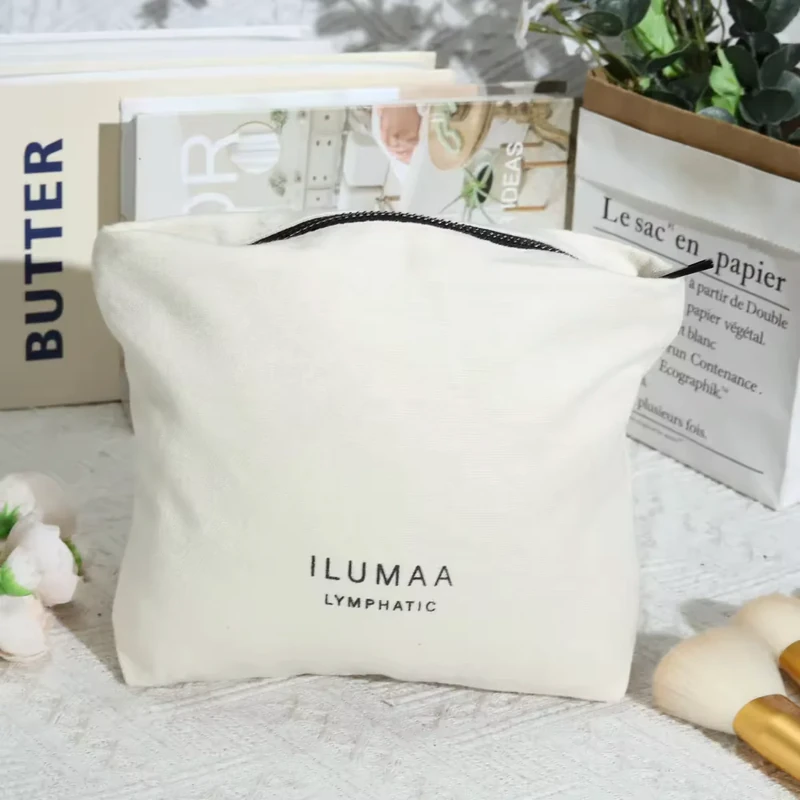
Choose a drawstring pouch when gathered presentation, flexible access and simple reopening suit the product. Choose a zipper pouch when you want a defined top closure and organized access to several loose items. The choice should come before the final dimensions: a drawstring needs space to gather above the contents, while a zipper needs a clear entry path and room around its ends and slider.
Two pouches with the same outer width and height can hold different products. A 23 × 14 cm zipper pouch is not a direct replacement for a 23 × 14 cm drawstring pouch, and neither dimension alone establishes usable capacity. Measure the objects, define the packing arrangement and compare the actual openings.
Start With the Contents and How People Use Them
A jewelry box that is opened once during gifting asks different things of a pouch than a travel kit opened repeatedly in a suitcase. For the box, presentation and a comfortable gather may lead the decision. For the kit, visibility, reopening and keeping small accessories together may matter more.
List the largest object and the smallest loose object. The largest determines whether loading is practical; the smallest reveals whether a gathered opening leaves an unacceptable gap. Also note protruding parts, corners, caps and handles. A pouch that accommodates a flat card may still resist a thick bottle with the same width.
Then decide whether users will support the body while opening, lift it by a separate handle or pull on the closure itself. A drawstring is not automatically a tested carry handle, and a zipper pull is not a bag handle. Those uses require separate construction decisions.
Compare the Two Closure Systems
A zipper combines intermeshing elements, a moving slider and textile tape, as explained in YKK's basic zipper guide. The finished opening depends on how those components are sewn into the pouch, including stops, end tabs and lining. The discussion here does not specify a particular zipper brand or establish water resistance.
| Buyer priority | Drawstring pouch | Zipper pouch |
|---|---|---|
| Gift presentation | Gathered top and visible cord or bow | Neat opening with a more defined silhouette |
| Small loose contents | Check the gap left after gathering | Check closed ends and construction for the actual small items |
| Loading bulky objects | Mouth can spread, but the body and gathering space still limit fit | Stops, tabs and seam turns can reduce clear entry length |
| Frequent opening | Simple fabric-and-cord movement | Slider access and lining clearance need attention |
| Flat storage | Soft body often folds readily | Zipper and end structure influence the fold |
| Branding | Logo can distort as the mouth gathers | Logo must avoid zipper bulk and end seams |
Neither closure makes a pouch waterproof, leakproof, odorproof or suitable for a particular protective use by itself. If those functions matter, specify the required performance separately and review materials, seams and testing together.
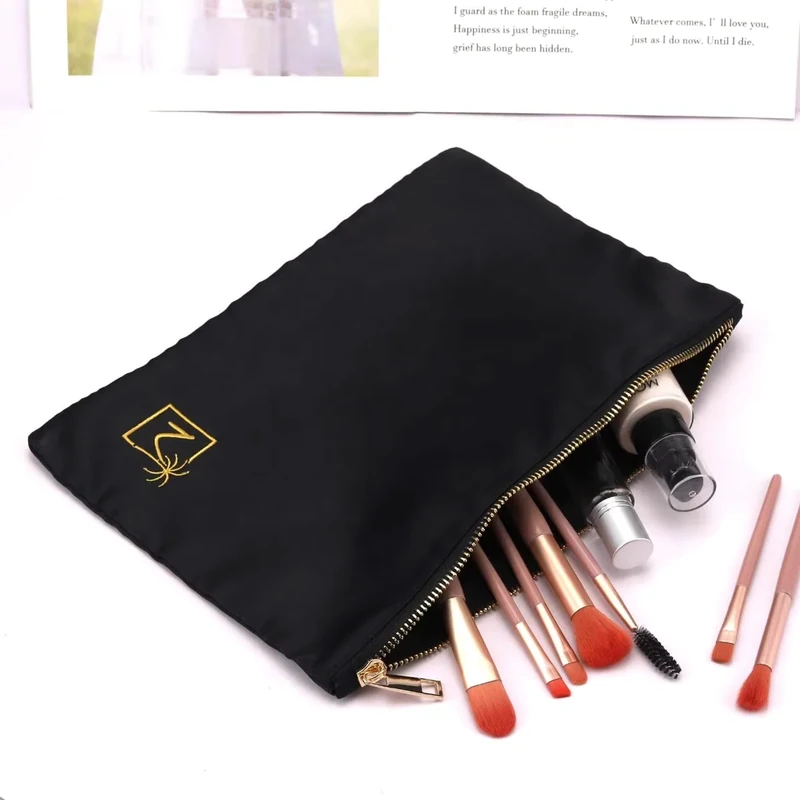
Compare Dimensions Without Confusing Outer Size and Entry Size
Use the following as sample planning examples, not stock specifications or guaranteed capacities. Drawstring dimensions are empty finished outer width × total height, including the channel. Box-shaped zipper examples use finished outer width × height × depth; flat zipper examples use width × height. Usable space is smaller and must be checked with contents.
| Product situation | Drawstring sample to explore | Zipper sample to explore | Deciding measurement |
|---|---|---|---|
| Jewelry card and accessories | 12 × 17 cm | 14 × 11 cm flat | Card entry plus any loose-item containment |
| Small boxed gift | 18 × 24 cm | 20 × 15 × 6 cm | Box depth, opening clearance and closing room |
| Makeup essentials | 20 × 26 cm | 23 × 14 × 6.5 cm | Tallest bottle, brush orientation and useful entry |
| Travel cables and adapters | 20 × 25 cm | 23 × 16 × 5 cm | Arrangement of rigid adapters and access to small pieces |
These pairs are alternative concepts, not equivalent capacities. For a drawstring sample, measure the usable height below the gathering zone. For a zipper sample, open the zipper fully and measure the unobstructed entry between the effective end restrictions. A zipper chain length on a component order is not automatically the pouch's clear opening.
Do not select a zipper merely by its nominal size designation and assume a known strength. Discuss element type, tape, slider, pull and installation as a compatible set. For drawstrings, specify the number of continuous cords, route and channel occupancy. In a common double-pull route, two cords travel through both channels, putting two moving runs in each.
Work Through a Cosmetic Kit Example
Imagine a kit containing a 15 cm brush, a compact and two short bottles. First arrange the complete items on a table with any dividers or protective wrapping. The proposed 23 × 14 × 6.5 cm zipper pouch is a starting shape to test, not a promise that all such kits fit.
Make a full-size paper shape to visualize the body, then approve a fabric sample for entry and closing. Try the brush in the intended orientation and insert the bottles without forcing them past the zipper ends. Close the zipper while supporting the pouch, checking that the contents do not push the lining into the slider path or distort the top.
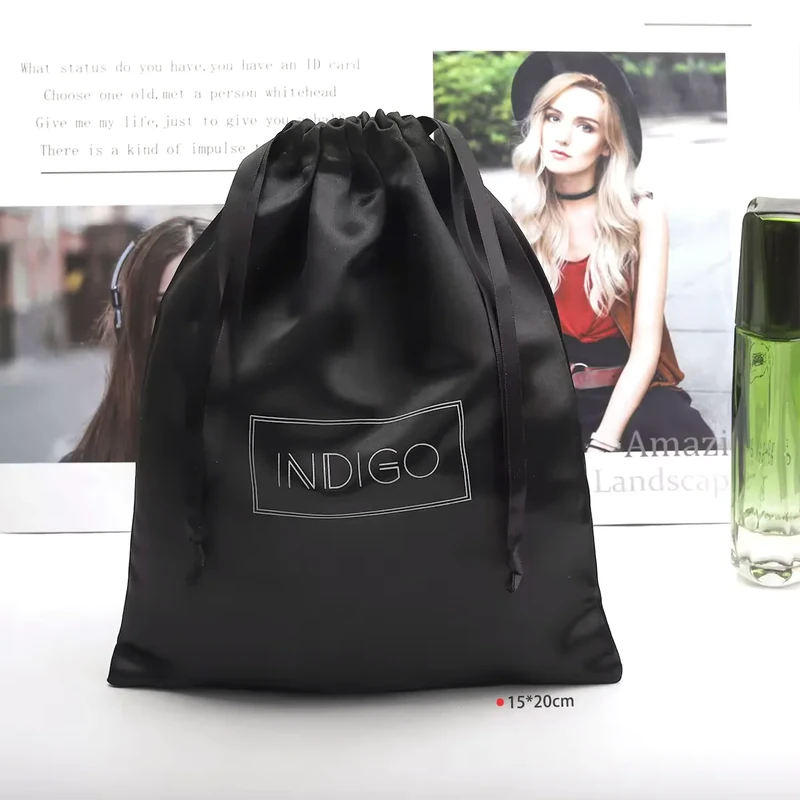
For a drawstring alternative, trial a 20 × 26 cm outer body with approximately 3 mm cord and a proposed 14 mm clear channel depth. Those trim dimensions also remain sample starting points. Place the same contents inside and see whether they can stay in the desired arrangement when the top gathers. A deeper, softer body may make a small compact harder to retrieve even when everything fits.
A proposed 65 × 25 mm logo can be centered on the zipper pouch front, with its lower edge 35 mm above the bottom seam. On the drawstring alternative, use the same artwork size but check its position after gathering rather than copying the same visual center. Record each accepted location from a finished seam so the two drawings cannot be confused.
Match Fabric, Lining and Closure Details
Cotton or canvas can support a textile-led appearance with either closure. Polyester may suit a different surface or travel presentation. Fabric names alone do not establish washability, weather protection or tear performance; review the actual construction and finish. A lining can improve the internal presentation but also reduces space and adds material near the opening.
With zippers, inspect whether lining or seam allowances enter the slider path. Check both ends, especially where bulky layers meet. A clean empty opening is only the first check: repeat the operation when the pouch is filled because pressure changes the position of the lining and top edges.
With drawstrings, inspect the channel junctions and exit openings. Thicker fabric can resist gathering even if a loose cord slides easily through an empty, straight channel. Wider ribbon may improve presentation but requires its own channel and end-finishing assessment.
A bag used for delicate jewelry also needs an interior review. Keep rough seam ends, exposed decoration backing or hard trim away from the item as far as the design permits. Neither a soft-looking fabric nor a specific closure supports an anti-scratch or anti-tarnish claim without evidence for the complete product.
Avoid the Most Expensive Closure Mistakes
The first mistake is deciding the logo and final bag size before checking entry. The second is replacing one closure with the other without revisiting usable height or opening geometry. The third is testing only an empty pouch. These problems often appear after the artwork and sample have otherwise been approved.
Use a short, repeatable sample review: insert the largest item, add the complete set, operate the closure and remove the smallest item. Inspect the packed profile from the customer's normal viewing angle. Record whether the pouch must stand, lie flat or fit within another package; those requirements can favor a gusset or a different zipper position.
For a range with several sizes, repeat the exercise on each size. Scaling a successful medium pouch proportionally may produce an awkward small opening or oversized trim on the smallest one. Approve separate dimensioned drawings for each retained version.
Conclusion
A closure should serve the contents and the user's routine. Drawstrings provide a gathered format; zippers create a more defined opening. Choose between them by testing entry, usable space, containment and repeated access with the real product set.
Key Takeaways
- Decide closure type before locking the final pouch dimensions.
- Measure the clear entry and usable interior separately from the outer body.
- Test zipper lining clearance and drawstring gathering with the pouch filled.
- Treat handles, protective performance and care requirements as separate specifications.
Frequently Asked Questions
It may help contain small loose pieces, but the item and interior construction still matter. Check the closed ends, lining, seams and any components that could contact the jewelry. A fitted insert or individual compartment may be more important than closure type alone.
The outer dimensions can be similar, but the usable space and opening behavior will change. A drawstring consumes height in its channel and gathering zone. A zipper creates end restrictions and requires installation space. Recheck the packed sample.
An ordinary zipper does not establish leakproof performance. Fabric, lining, seam construction, zipper design and the intended conditions all matter. Discuss any liquid-containment requirement separately instead of inferring it from the closure.
There is no reliable universal price rule. Compare quotations using the same fabric, body size, lining, decoration and quantity, with the closure specification clearly stated. More elaborate ribbon, channels or trim can change the comparison.
Provide the product dimensions, photos, packing arrangement, smallest loose item, desired access and proposed bag sizes. A physical product or complete set helps test the alternatives. Include logo artwork and any care or carrying expectations.
Related Resources
- Cosmetic bag size guide for bottles, brushes and complete kits.
- Single vs double drawstring pouches for closure routing.
- Custom travel pouches for travel and organization designs.
Contact WisePouch with your contents and preferred dimensions to compare a drawstring and zipper sample for your project.
Share your product dimensions, intended use, preferred fabric, closure, logo artwork and estimated quantity. We can review the details needed for a quotation and sample.
Discuss Your Pouch Project