
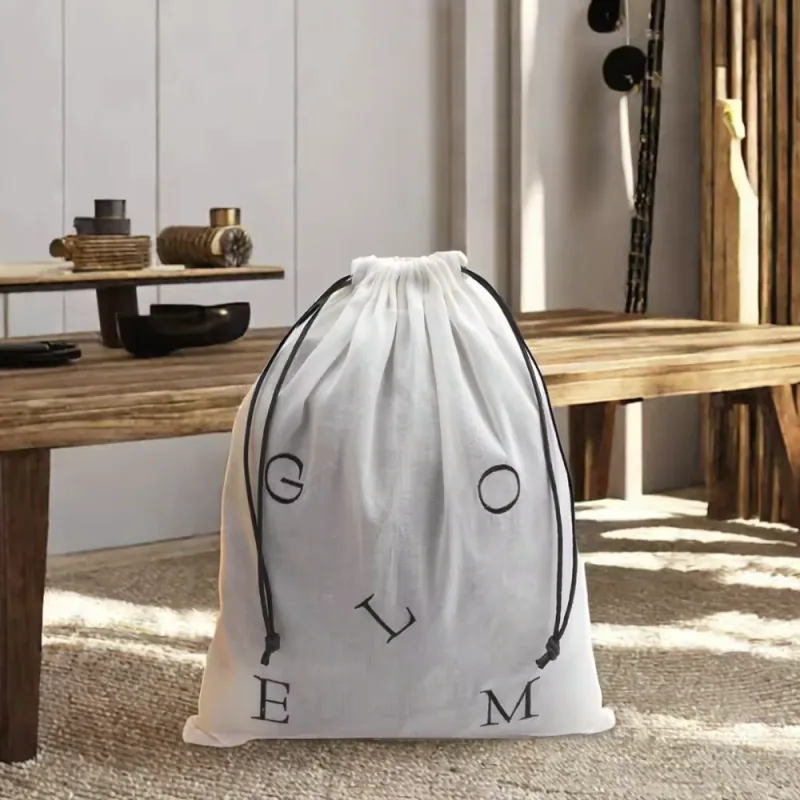
A handbag dust bag should accommodate the complete stored handbag without forcing its sides, handles or hardware into a new shape. Measure the body width, depth and packed height, decide where the handles and strap will sit, then compare a flat drawstring construction with a gusseted option if the bag is bulky.
The proposals below are starting points for custom sampling. Flat sizes mean finished empty outer width × total height, including the drawstring channel. Three-dimensional examples are labeled separately. They are not guarantees that every handbag with a particular retail size name will fit.
Measure the Complete Storage Silhouette
Place the handbag in the form in which customers should store it. Include any approved internal support, tissue, detachable strap or accessory pouch. Measure the maximum width across the body, the deepest front-to-back section and the height from the base to the highest packed point.
Do not rely on the dimensions printed on a handbag product page without checking their convention. They may exclude handles, show the narrowest part of a tapered silhouette or omit protruding hardware. A closure tab, side buckle or structured base can determine the required dust bag opening.
Decide whether the handles remain upright, rest naturally beside the body or lie in another product-appropriate position. Do not fold a rigid handle simply to fit a smaller dust bag. Likewise, document where a loose shoulder chain sits so it does not become an unexpected lump against one side.
For a soft tote, use a repeatable fold if folded storage is intended. For a structured handbag, keep its normal form during measurement. Combining those two measurement methods in one size table produces misleading comparisons.
Dust Bag Size Proposals for Different Handbag Forms
Choose candidates by the measured envelope, not by labels such as mini, medium or oversized. The application column is a development direction only.
| Proposed outer dust bag size | Approximate inches | Construction | Development direction |
|---|---|---|---|
| 25 × 30 cm | 9.8 × 11.8 in | Flat W × total H | Compact clutch, wallet or slim accessory set |
| 30 × 35 cm | 11.8 × 13.8 in | Flat W × total H | Small handbag with limited depth |
| 35 × 40 cm | 13.8 × 15.7 in | Flat W × total H | Compact handbag with manageable handle height |
| 40 × 50 cm | 15.7 × 19.7 in | Flat W × total H | Wider body or taller stored silhouette |
| 50 × 65 cm | 19.7 × 25.6 in | Flat W × total H | Larger tote or handbag project |
| 35 × 40 × 10 cm | 13.8 × 15.7 × 3.9 in | Gusseted W × total H × D | Structured-body proposal requiring depth verification |
| 40 × 50 × 15 cm | 15.7 × 19.7 × 5.9 in | Gusseted W × total H × D | Bulkier handbag proposal with a formed base |
For gusseted dimensions, specify the empty bag opened into its intended shape without filling or stretching. Confirm exactly where depth is measured. Outside depth is not the maximum handbag depth the interior can accept.
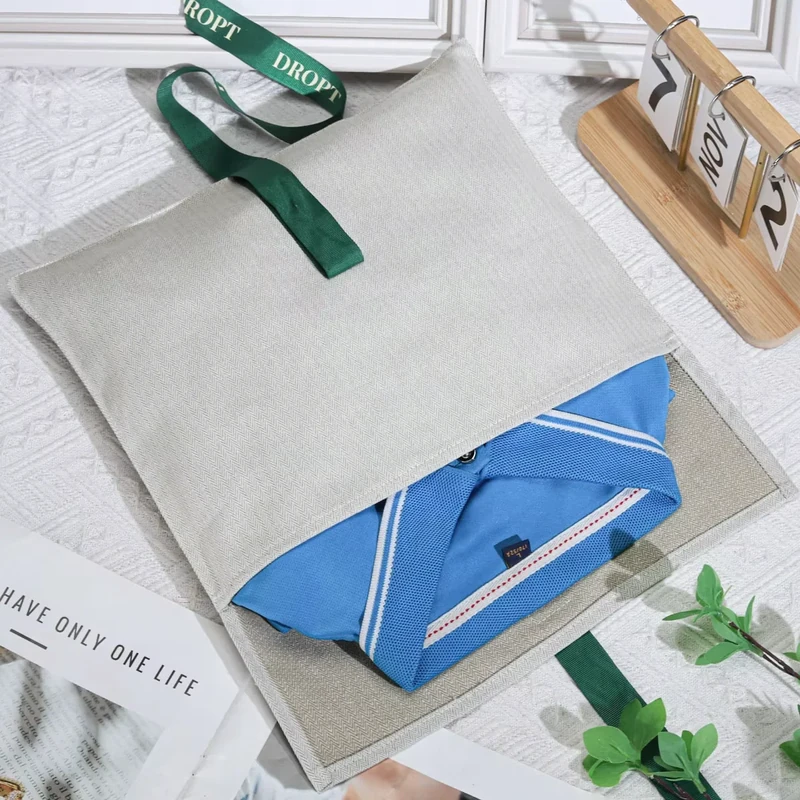
Account for Depth Before Selecting Flat Width
Suppose a structured handbag measures 28 cm wide, 24 cm high and 10 cm deep, approximately 11.0 × 9.4 × 3.9 in, before any extra handle height. For a simplified rectangular cross-section, half the perimeter is 28 + 10 = 38 cm.
That means an ideal flat tube already needs 38 cm of usable width before ease. A 35 cm wide flat dust bag is unsuitable as a starting choice even though its width exceeds the handbag's 28 cm face width. Comparing outer widths above 38 cm is necessary; the correct amount depends on seams, fabric, lining and the opening.
A gusseted design offers another route. It assigns planned depth to the bag and may produce a tidier silhouette around the base. However, adding a nominal 10 cm outside gusset does not establish 10 cm of unobstructed inside depth. Review the complete pattern and sample.
For a second example, a softer tote packed to a 32 × 12 cm cross-section has a half-perimeter of 44 cm, approximately 17.3 in. A 50 cm outer-width prototype could be a reasonable candidate to investigate, but its height and closure still need independent assessment.
Allow for Handles, Straps and the Gathered Neck
Height should be measured to the highest point of the intended stored arrangement. If a 24 cm high handbag has handles that remain 12 cm above the body, the packed height becomes 36 cm, approximately 14.2 in, before the dust bag's base formation and closure space are considered.
Do not assume that a 40 cm total-height pouch will close neatly around that arrangement. Part of its height belongs to the channel, and the fabric must travel under the product and gather above the handles. Compare a taller sample or a different opening design.
Look at the closed sample from the side. Tight diagonal lines often reveal where the bag is being pulled over a handle, corner or buckle. The dust bag should not need the handbag to be squeezed while its cords are tightened.
If the brand packs straps separately, make that part of the instruction rather than an informal solution used by one person during approval. A spare strap added later can change both bulk and the way the dust bag hangs around the product.
Choose Fabric and Branding Around the Storage Use
Cotton and cotton canvas are available directions for custom dust bags. Compare actual samples for surface feel, drape, opacity and the way seams sit against the handbag. Fiber composition and fabric weight should be written into the specification; neither a material name nor a heavy hand establishes protective performance.
A dust bag is only one component of care. Hermès' leather care instructions place a dust cover or original box within a broader storage recommendation concerning the environment. Follow the handbag maker's own material-specific instructions rather than assuming any fabric cover solves every storage issue.
Check the actual fabric color against the intended handbag finish where relevant. Dark fabric, lining, printed areas and attached labels may contact the product. If color transfer or another material interaction is a concern, agree how that compatibility will be assessed before selecting the construction.
Position the logo on the filled dust bag. A centered mark on an empty rectangle may sit too low once a deep base forms, or disappear into folds near the top. Compare the visual result with the handbag inserted and the cords closed.
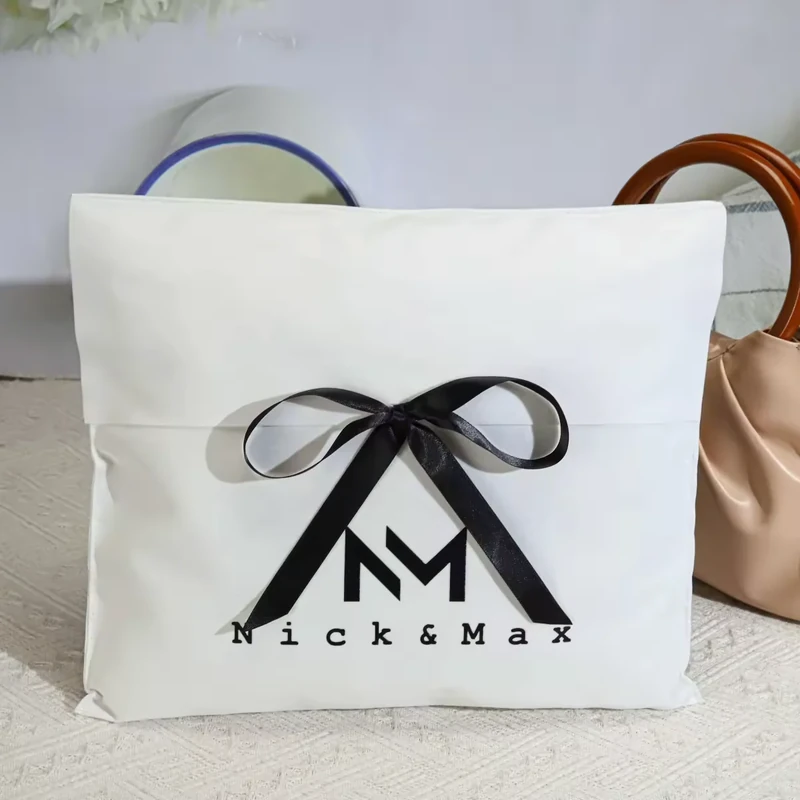
Approve a Size Family Without Compressing the Products
Group handbag models by their full stored envelopes. A shared dust bag can work when depth and handle arrangements are similar. A slim wide clutch and a deep compact handbag may need different constructions despite having comparable front-face dimensions.
For each proposed size, test the largest model, the deepest model and the model with the most prominent hardware. Also inspect the smallest product's presentation. Oversizing can produce excessive folds and make a compact handbag awkward to remove from a deep pouch.
Record the packing sequence, strap location, drawstring operation and logo position. Agree finished-size tolerances and a fit requirement based on the relevant handbag samples. If retail staff will pack the product, have someone unfamiliar with the development process repeat the approved method; this can reveal hidden assumptions.
Finally, evaluate the outer retail box or shipping package separately. A fabric dust bag should not be assumed to provide the structural support or impact protection of a rigid package.
Conclusion
Handbag dust bag sizing depends on depth and stored shape as much as on face width. Measure handles and accessories, compare appropriate flat or gusseted structures, and approve the filled result without compressing the handbag. A consistent packing instruction is part of a reliable size specification.
Key Takeaways
- Measure the complete stored handbag, including its handle position and accessories.
- For flat pouches, depth consumes width around the sides.
- A gusset changes construction; its outside depth is not guaranteed usable depth.
- Check the fabric and logo on the filled, closed sample.
Frequently Asked Questions
There is no universal medium-handbag dimension. A 35 × 40 cm flat proposal may be worth considering for some compact shapes, while a deep or tall model can need substantially more room. Use the full product measurements and check a sample.
Measure the position intended for storage and appropriate for the handbag construction. Include upright handles in total packed height. Do not force rigid handles into a folded position merely to fit the dust bag.
The fabric also wraps around the handbag's depth. A simplified rectangular cross-section requires usable flat width at least equal to body width plus depth before ease. Outside bag width additionally includes construction that is not usable interior space.
Consider it for a deep, structured base or when a flat pouch creates too much loose fabric and distortion. Compare loaded prototypes. A gusset can improve shape compatibility, but its dimensions and opening still require product-specific approval.
You can test a shared size, but the smaller item may sit poorly in it. Evaluate removal, appearance and excess fabric as well as maximum fit. Separate size groups are useful when the packed forms differ substantially.
Related Resources
- Custom dust bags — cotton, canvas and branding options.
- How to measure a drawstring pouch — width, girth and measurement conventions.
- Shoe bag size guide — sizing another bulky fashion product.
Send the handbag's width, depth, stored height and a packing photograph through our contact page to review a custom dust bag sample.
Share your product dimensions, intended use, preferred fabric, closure, logo artwork and estimated quantity. We can review the details needed for a quotation and sample.
Discuss Your Pouch Project