
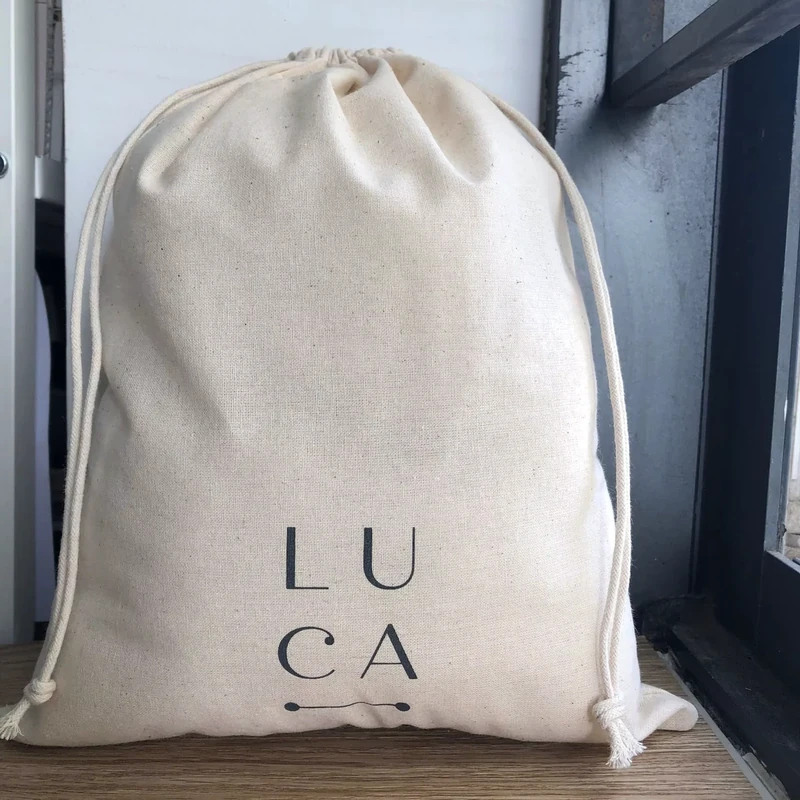
A laundry bag should be sized around the clothing people actually put inside it, including the space needed to close and empty the bag. A 32 × 48 cm travel pouch and a 61 × 91 cm collection sack solve different problems; neither size tells you how many kilograms the finished bag can carry. Start with a representative clothing bundle, choose the collection routine, and approve the dimensions through a filled sample.
1. Match the size to the collection routine
For travel, a bag often separates worn clothing from clean items inside a suitcase. Its footprint must work with the suitcase layout, and its opening must accept clothing without complicated folding. For a hotel room, consider where guests find the empty bag, whether they use a service form, and how staff collect it. A larger household or laundry collection sack introduces different questions about handling and emptying.
The table gives illustrative sample starting points, not inventory, universal laundry sizes or tested capacities. Flat dimensions mean empty finished outer width × total height, measured without stretching. Total height includes a drawstring channel when present; handles are excluded. Inches are approximate, using 1 in = 2.54 cm.
| Proposed use | Flat outer size, cm | Approximate inches | What to check first |
|---|---|---|---|
| Small travel separation | 25 × 35 | 9.8 × 13.8 | Actual garment bundle and access |
| Travel laundry pouch | 32 × 48 | 12.6 × 18.9 | Suitcase fit after filling |
| Hotel guest laundry | 40 × 61.5 | 15.7 × 24.2 | Guest use and collection method |
| Taller handled sack | 46 × 84 | 18.1 × 33.1 | Grip position and filled shape |
| Large collection sack | 61 × 91 | 24.0 × 35.8 | Handling, opening and intended load |
Manufacturer catalogs also show why a single “standard” size is unhelpful: Westford Mill lists several dimensions for one cotton stuff-bag family. Those are specifications for its own products, not capacity evidence for another construction. Westford Mill W216.
2. Measure loose clothing as users will pack it
Folded display clothing occupies a different shape from clothing dropped into a laundry bag. Decide which condition represents normal use. For a guest-room program, ask someone unfamiliar with the design to load the intended mix naturally. Measure the resulting bundle's widest span, height and thickness before trying a sample.
Record the garment mix as well as measurements. “Two shirts, one pair of trousers and small garments” is more reproducible than “a weekend of laundry,” but still needs actual examples because garment size and fabric vary. Use the largest plausible mix for the intended service, then test a smaller mix to check whether the bag becomes unnecessarily cumbersome.
Do not convert flat width × height into liters. A flat sack changes shape when filled, and some of its width wraps around the bundle's depth. Likewise, do not promise a garment count from an empty-bag photograph. Keep a reference loading photograph beside the approved sample so future discussions use the same packing condition.
3. Reserve room for the opening and closure
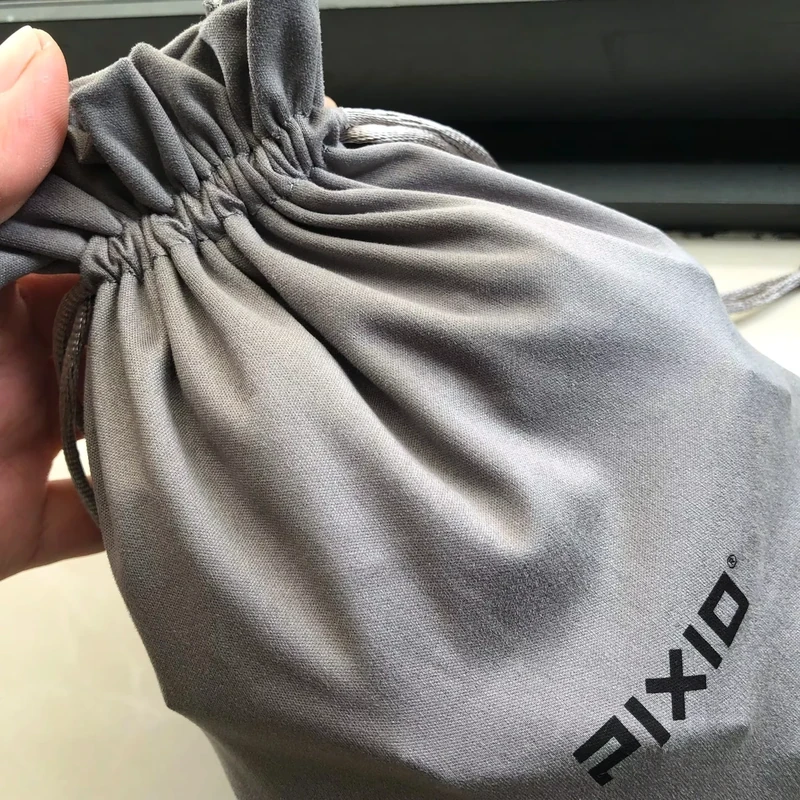
A drawstring bag needs fabric above its contents to gather. If clothing reaches the channel, the user may be able to pull the cords while leaving an uncomfortable opening or compressing the garments. Specify both total outer height and the approximate closed position you want to evaluate. The useful loading height is determined by the sample, not simply by subtracting the channel's height.
For an initial 40 × 61.5 cm hotel sample, you could propose a 3 cm channel and reserve an initial 8–10 cm region at the top for closure evaluation. These are development assumptions, not universal allowances. The fabric, cord and clothing shape determine whether that region is sufficient.
Single-pull and double-pull cords create different handling experiences. Try closing and reopening each with the bag partially and fully loaded. A zipper can suit a travel pouch, but measure the usable opening between its end stops. Neither a drawstring nor an ordinary zipper establishes a liquid-tight or odor-containing enclosure. If either function matters, make it a separate requirement instead of assuming the closure provides it.
4. Develop a hotel bag with a worked packing example
Suppose a hotel's selected clothing bundle measures approximately 28 cm across, 35 cm tall and 9 cm deep when loosely arranged. A starting flat width of 40 cm is plausible because the fabric must cover both width and depth: 28 + 9 = 37 cm before useful ease. This is a rough envelope check, not a finished pattern formula.
Start with the illustrative 40 × 61.5 cm bag. Place the actual garments inside, close it normally, and note whether the upper clothing obstructs the channel. Inspect the lower corners: excessive strain there may indicate that depth or bottom shaping needs attention, rather than simply more height.
Then try a second version only if the first reveals a specific problem. If insertion is awkward but height is ample, compare a wider sample. If the loaded shape fits but staff cannot identify the service form, review an accessible label or document arrangement. Changing the width, cord, fabric and artwork together makes it difficult to understand which revision solved the problem.
Finally, test removal. A bag that closes well but requires staff to pull garments out one by one may be poorly matched to the collection process.
5. Choose fabric, cords and branding together
Cotton, cotton canvas and polyester can all enter a laundry-bag discussion, but each name needs a precise fabric specification. Ask for composition, construction, finished weight, surface finish and proposed care. Cotton canvas identifies a fabric category; “heavy” by itself does not specify its thickness or strength.
For a comparative brief, request a lighter woven cotton sample around 160–200 GSM and a more substantial canvas-style sample around 240–280 GSM, if suitable materials are available. These are illustrative development weights, not recommended load classes. Compare closure effort, folding bulk and hand feel before deciding which matches the service.
Cotton or polyester drawcords can be evaluated in a proposed 4–5 mm diameter for a medium hotel sample. Channel clearance, knot size and the loaded closing action should determine the final cord. A handle is a separate construction choice; adding one does not assign a safe carrying load.
For the logo, compare a modest screen print with a woven or printed label. Embroidery and heat transfer require material-specific evaluation. Keep service instructions readable after the mouth gathers, and place a care label where users can find it.
6. Approve the bag in the actual service sequence
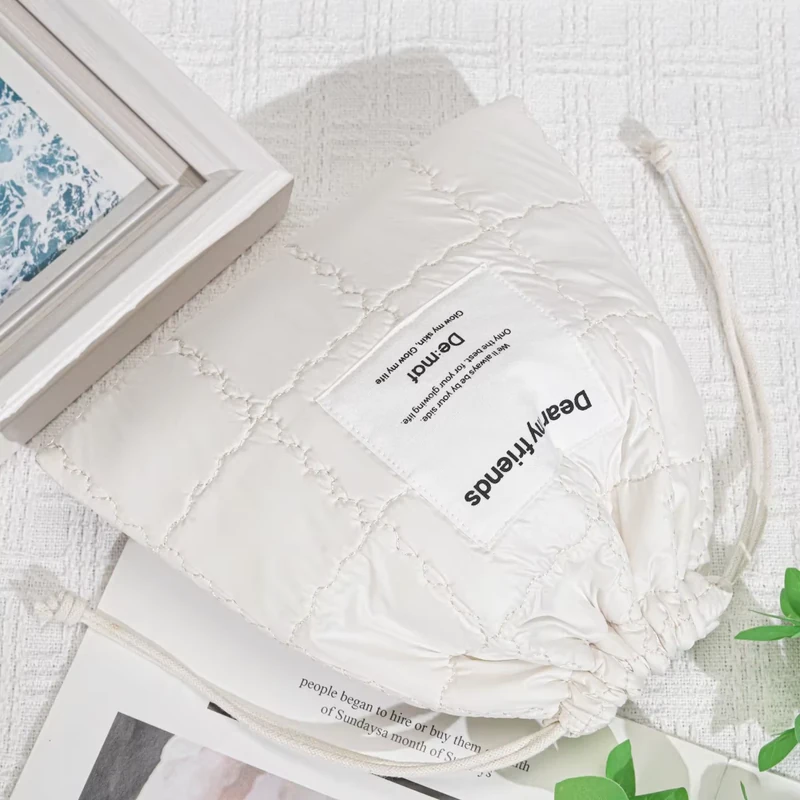
Use the sample through its proposed sequence: storage, issue to the user, loading, closing, collection, emptying and any intended cleaning. A bag may pass a desk inspection yet fail to fit a guest-room drawer or become awkward beside a service trolley.
Record the agreed outer dimensions and tolerance, fabric reference, closure configuration, decoration position and packing method. If carrying is intended, state the expected contents and handling method so suitable construction and verification can be agreed. Do not infer a load rating from size or GSM.
If the bag will be cleaned and reused, evaluate the complete decorated sample under the proposed care conditions. Review dimensional change, color transfer, print appearance, seams and cord operation afterward. No general fabric name guarantees machine washing or commercial laundering. The accepted care instructions should follow the actual material, trim and verification results.
Conclusion
Choose laundry bag size by observing the whole collection task. Begin with realistic clothing, reserve usable closure space, and assess how the filled bag is handled and emptied. Dimensions become useful purchasing information when they are connected to an approved loading example and a clear material specification.
Key Takeaways
- Use outer width × total height consistently; include the drawstring channel.
- Treat the size table as sample starting points, not capacities or load ratings.
- Test loose clothing, opening clearance and collection handling together.
- Confirm care on the finished bag, including its logo, cord and labels.
Frequently Asked Questions
A 32 × 48 cm flat pouch is one useful sample starting point. Its suitability depends on the garments, filling level and available suitcase footprint. Check it filled alongside the other organizers before ordering.
It is a recognizable size description, but it does not establish universal construction or capacity. It converts to 60.96 × 91.44 cm; a proposed 61 × 91 cm bag is a rounded, separately specified size.
The dimensions alone do not answer that. Clothing bulk, packing method, channel placement and construction change the result. Approve a representative filled sample and distinguish usable room from any separately verified carrying load.
Only if the specific design is intended and verified for that use. A laundry collection sack and a wash-through laundry bag have different requirements. Confirm the fabric, trims, decoration and care instructions before making that claim.
Start with the collection routine. Drawstrings close the mouth; handles provide a separate gripping point. If staff will carry the filled bag, review the handle attachment or intended cord use and agree suitable verification for the expected contents.
Related Resources
- How to measure a drawstring pouch explains consistent external measurements.
- Polyester versus cotton travel bags compares material decisions for portable organizers.
- Custom laundry bags introduces available development options.
Send WisePouch your clothing example, intended routine, target size and branding through our contact page to develop a suitable sample.
Share your product dimensions, intended use, preferred fabric, closure, logo artwork and estimated quantity. We can review the details needed for a quotation and sample.
Discuss Your Pouch Project