
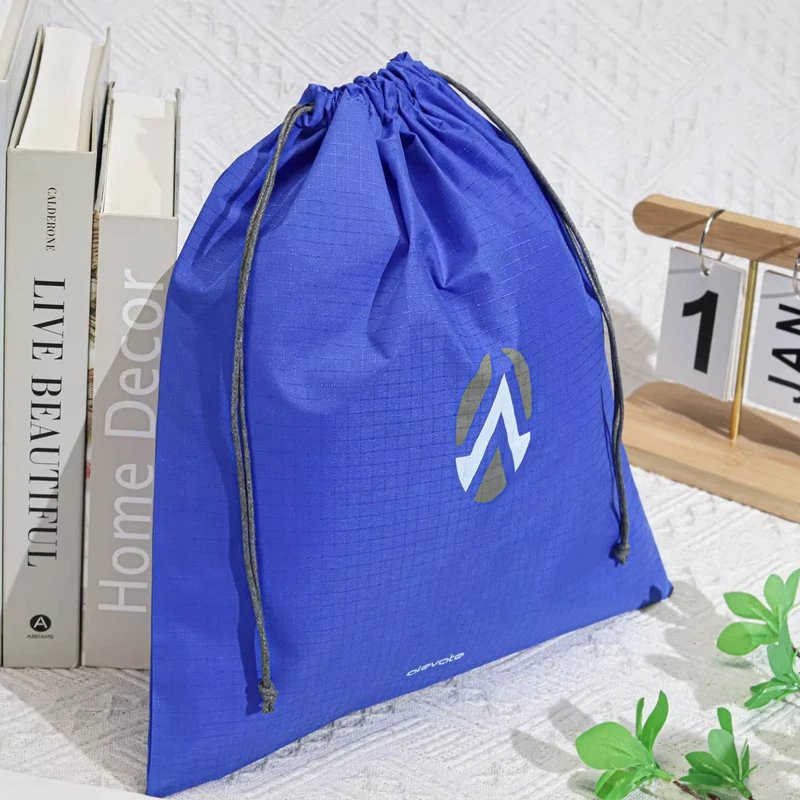
Choose between polyester and cotton travel bags by comparing complete fabric specifications and finished samples. Polyester may enter a brief focused on a particular smooth fabric, while cotton may enter one focused on a matte textile feel. But neither fiber name establishes the finished bag's weight, strength, waterproofness, cleaning method or quality.
For a useful decision, keep the dimensions, contents and closure consistent, then evaluate two identified fabrics. That approach reveals whether the difference matters to the actual travel organizer rather than relying on general statements about clothing fibers.
1. Start with fiber identity, then define the fabric
Cotton is a natural plant fiber; polyester is a synthetic polymer-based fiber. CottonWorks distinguishes these fiber categories, but the category is only the beginning of a pouch specification. CottonWorks natural and synthetic fibers.
Ask for composition, weave or other construction, finished fabric weight, surface treatment, color and lining. If the fabric is a blend, record the proportions. “Polyester travel fabric” and “cotton travel fabric” are both too broad to reproduce a design reliably.
Keep fabric weight separate from yarn size. A supplier may describe some synthetic fabrics by denier, which concerns yarn linear density; a GSM figure concerns mass per area of fabric. Neither number by itself supplies the missing construction or finished-bag performance.
For the same reason, a cotton canvas bag is not necessarily heavier than every polyester bag. A lining, coating, pocket system, zipper and handles can dominate differences in the finished item. Weigh actual completed samples if low packed weight is a project requirement.
2. Build a fair material comparison
The following comparison uses illustrative sample briefs, subject to material availability and feasibility. The weights are not standard travel categories, inventory or strength ratings. The proposed shaped size is empty finished outer W × H × D, with W left to right, H bottom to top and D front to back.
| Specification or decision | Polyester sample | Cotton sample |
|---|---|---|
| Outer size | 25 × 18 × 8 cm | 25 × 18 × 8 cm |
| Initial fabric weight | Proposed 140–180 GSM | Proposed 160–200 GSM |
| Material details | Confirm weave, finish and any coating | Confirm weave, finish and composition |
| Closure | Same agreed zipper arrangement | Same agreed zipper arrangement |
| Interior | Same pocket and lining brief | Same pocket and lining brief |
| Compare physically | Weight, body, folds, surface and closure | Weight, body, folds, surface and closure |
| Confirm independently | Care and any water-related requirement | Care and any water-related requirement |
The size is approximately 9.8 × 7.1 × 3.1 in, using 1 in = 2.54 cm. It is an external design reference, not an internal capacity.
If the available fabrics produce different body behavior, document that result instead of forcing equal GSM. The goal is to find a practical construction for the intended experience, not to prove that equal numbers make two materials equivalent.
3. Separate moisture, cleaning and water protection
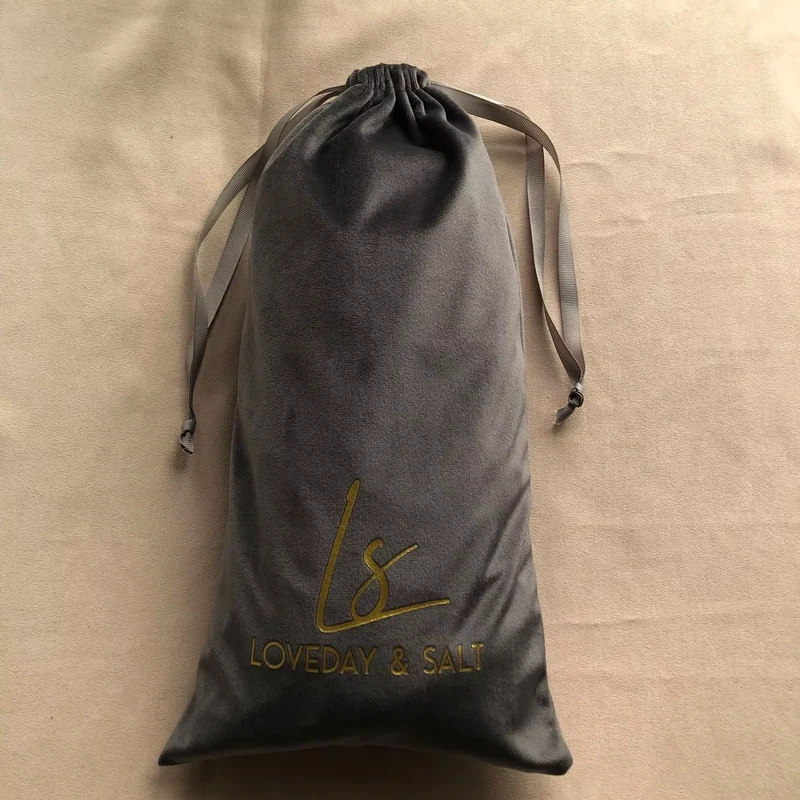
“Absorbs less water,” “dries quickly,” “water-resistant” and “waterproof” describe different behaviors. A fabric's fiber, construction and finish can influence moisture handling, while seams and closure create additional paths in the finished bag. Do not combine those ideas into a single claim that polyester automatically keeps contents dry.
CottonWorks' discussion of its TransDRY technology notes that drying time varies with fabric construction and finishing. That is a useful reminder to evaluate the actual fabric; it is not evidence that a WisePouch sample has that treatment or those performance results. CottonWorks TransDRY.
Define the use precisely. Is the organizer intended for clean clothing, worn clothing, closed toiletry containers or wet items? A bag that separates dry garments does not need the same evaluation as one marketed to contain wet swimwear. Ordinary zipper construction should not be treated as leak containment.
For cleaning, request a proposed care method and evaluate the complete sample, including logo, lining, pockets and trims. Inspect size change, color transfer, surface appearance and zipper operation afterward. Do not publish machine-wash or drying instructions based solely on fiber content.
4. Work through a travel-organizer example
Imagine a brand developing a pouch for a folded eye mask, a compact charger, cables and a small notebook. In the intended arrangement, these hypothetical contents occupy approximately 21 cm wide, 14 cm high and 5 cm deep. A 25 × 18 × 8 cm gusseted sample provides a useful first trial, with actual room reduced by seams, corners, lining and pockets.
Construct cotton and polyester candidates with the same zipper and pocket layout. Load each from the same reference photo. Check whether the notebook passes through the opening without bending and whether the charger creates an uncomfortable bulge. Close the zipper without forcing the contents down.
Now place both filled samples in the intended backpack compartment. Record how easily each slides into place and whether the body collapses or folds in a way that interferes with access. These are sample observations, not fiber-wide conclusions.
If one sample needs more body, discuss a fabric change or local construction adjustment. Adding a heavy lining to the entire pouch may solve the appearance issue while defeating a low-weight goal. If a pocket is too tight, change its dimensions before enlarging the whole organizer. This keeps revisions connected to the problem actually observed.
5. Match closures and branding to the selected fabric
For zipper pouches, check the usable opening, pull grip, corner behavior and internal clearance around the contents. A drawstring can work for simpler flexible bundles, but its channel uses total height and the mouth gathers around the contents. Compare the intended opening action rather than selecting a closure from photographs alone.
If you explore a flat drawstring alternative, specify empty finished outer W × total H, including the channel. A proposed 25 × 35 cm pouch is approximately 9.8 × 13.8 in. That size is a separate sample concept; it is not equivalent to a 25 × 18 × 8 cm shaped pouch.
Screen printing, heat transfer, embroidery and woven or printed labels can be assessed on either material where suitable. The actual surface, finish, artwork and process matter. Confirm compatibility on a production-representative swatch, especially when heat or dense stitch coverage is involved.
For the shaped organizer, compare a proposed 6 cm wide logo on the main panel with a small label near a seam. Examine visibility while the pouch is partly inside a backpack. If users identify the bag mainly by its top or pull side, a prominent front logo may not provide the most useful placement.
6. Make the purchasing decision from recorded priorities
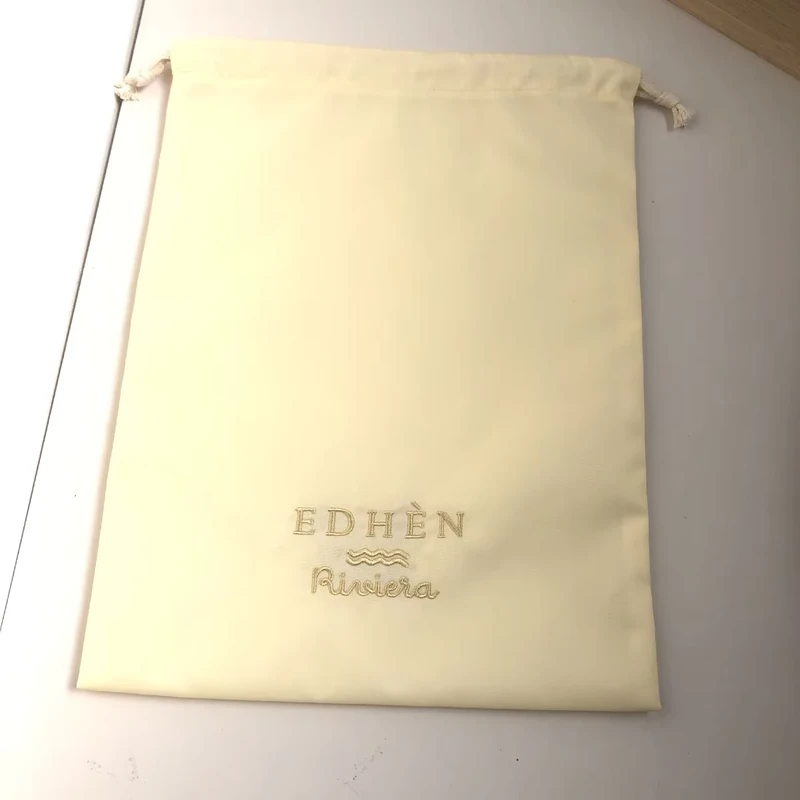
Before reviewing quotations, rank the actual priorities: packed weight, hand feel, body, appearance, easy cleaning, print detail or budget. Use the samples to judge each priority with the intended contents. An attractive fabric may still be the wrong choice if the organizer no longer fits the luggage location.
Record actual sample weight instead of estimating from GSM alone. Compare prices with the same size, quantity, closure, pockets, labels and packing. Ask which details account for a difference before changing the material unnecessarily.
If recycled polyester, organic cotton or supporting documentation is requested, verify the specific sourcing and documents available for the order. A fiber name or natural-looking color does not establish those attributes. Avoid a blanket environmental winner without evidence matching the proposed product and claim.
The final approval should identify the fabric reference, composition, finish, dimensions and tolerance, closure, internal construction, artwork and agreed care. Include the representative packing photograph. For later reorders, these records protect the intended behavior more effectively than a brief that says only “same cotton travel bag.”
Conclusion
Polyester and cotton are starting points for material selection, not complete performance specifications. Compare matched organizers with the real contents, review cleaning and moisture requirements separately, and select the construction that satisfies the project's priorities. The finished sample should drive the decision.
Key Takeaways
- Specify construction, finish and weight alongside fiber content.
- Compare actual finished weight and packed shape.
- Keep drying, water resistance and leak containment as separate requirements.
- Approve care and logos on the complete material combination.
Frequently Asked Questions
No. Fabric weight, size, lining, pockets, zippers and other components determine the finished weight. Compare completed samples made to the intended specifications when weight is a priority.
The fiber alone does not establish leak containment. Fabric finish, seams, lining and closure all matter. State any containment requirement explicitly and agree suitable verification for the completed design.
Yes, cotton fabrics can be considered for travel organization. Choose a specific construction that provides the desired feel, body and packing behavior, then verify fit, decoration and care on the complete sample.
There is no single answer across all cotton and polyester fabrics. Surface, finish, artwork and printing process affect the result. Compare decorated swatches at the intended logo size and confirm process compatibility before production.
A blend is another candidate rather than an automatic compromise with the best properties of both fibers. Record its exact proportions, construction and finish, then include it in the same sample evaluation if it addresses a specific project need.
Related Resources
- Travel pouch size guide connects dimensions with packing tasks.
- Laundry bag size guide covers clothing collection and separation.
- Custom travel pouches introduces available customization directions.
Share your target contents, preferred feel and care expectations through Contact WisePouch to compare suitable travel-pouch materials.
Share your product dimensions, intended use, preferred fabric, closure, logo artwork and estimated quantity. We can review the details needed for a quotation and sample.
Discuss Your Pouch Project