
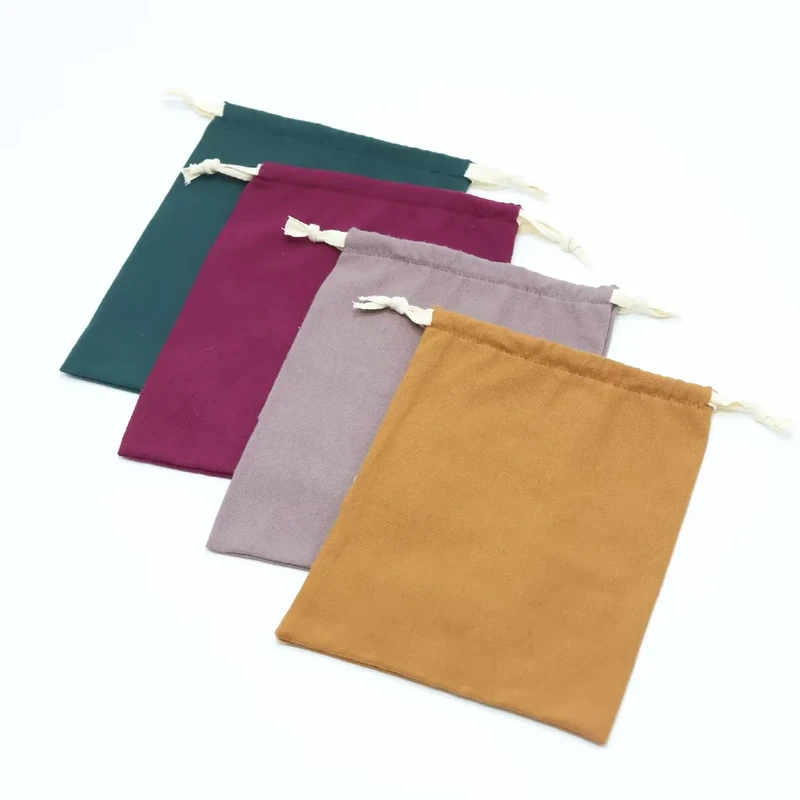
Choose velvet-style, faux-suede or microfiber pouches by their exact surface and construction, not by assuming one name guarantees better jewelry protection. These categories can overlap. Velvet-style describes a pile appearance, faux suede describes a suede-like surface, and microfiber refers to very fine fibers. A suede-like fabric may itself use microfibers.
For a useful comparison, request identified swatches and make the same jewelry-packing trial in each. Confirm composition, thickness or weight, backing, inner contact surface, closure and decoration. A soft hand feel alone does not prove scratch resistance, tarnish prevention or lint-free performance.
1. Understand what each material name describes
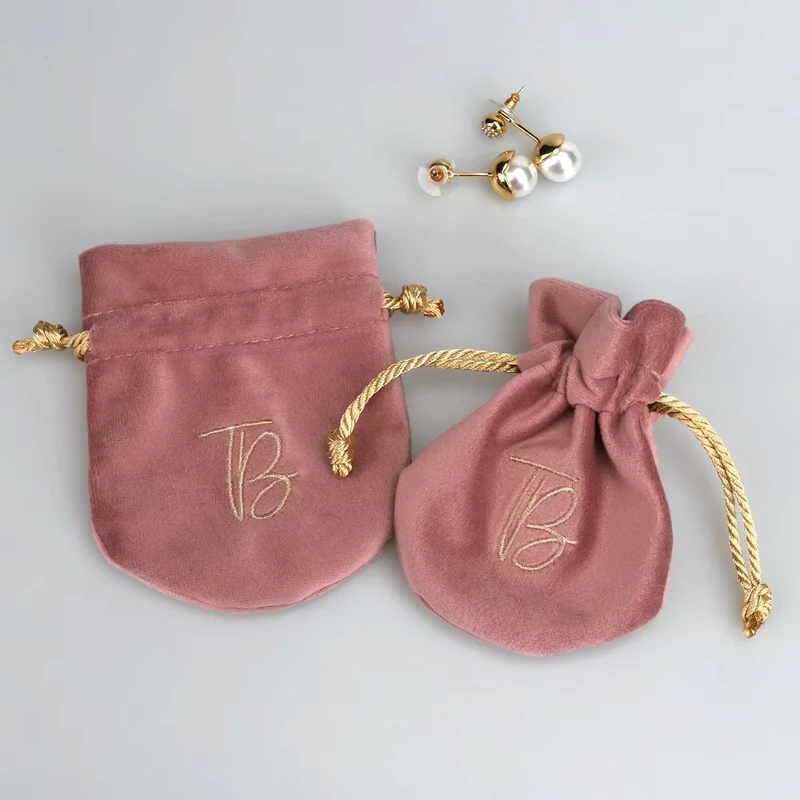
Velvet-style pouch materials are selected for a raised, plush-looking surface. The commercial description may cover different constructions, so ask whether the proposed fabric is woven or knitted, what fibers it contains and whether both faces have the same finish. Do not infer silk content from a velvet description.
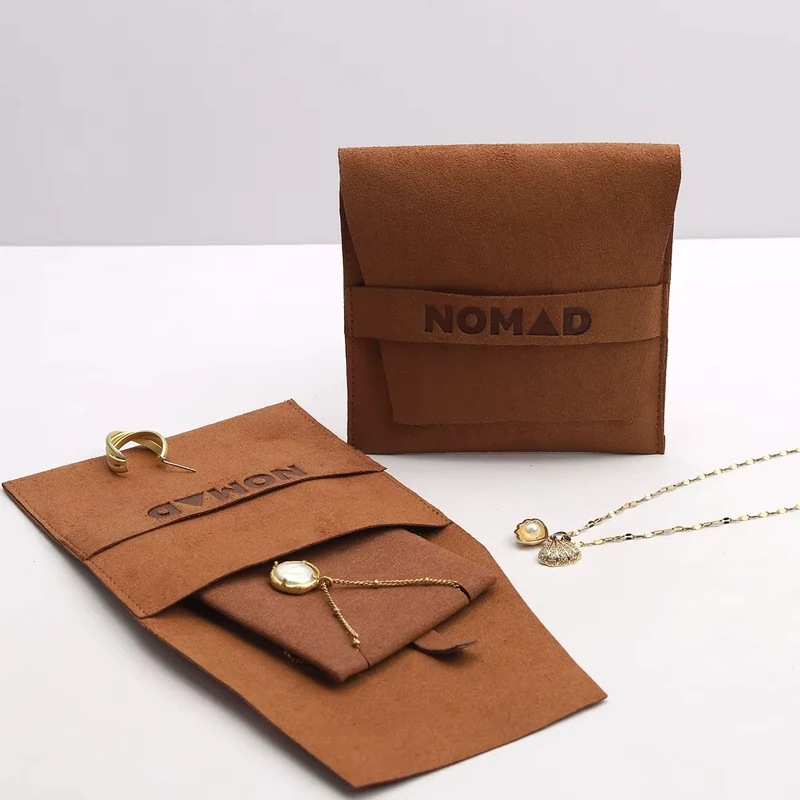
For WisePouch development, the suede comparison here means faux suede, not animal leather. Ask what creates the surface and whether the material has a binder or backing. Toray's Ultrasuede ST is one manufacturer example of a suede-textured material combining polyester microfibers and polyurethane binder; its specification demonstrates why appearance alone does not identify composition. It is not a statement that WisePouch supplies that branded material. Toray Ultrasuede ST.
Microfiber describes fineness rather than one universal fabric. Contec explains that microfibers can be polyester or a polyester/polyamide combination. That definition does not make every microfiber pouch a cleaning cloth or establish its suitability for a particular jewelry surface. Contec microfiber technical note.
2. Compare the surface and product contact points
The following table is a sample evaluation guide, not a ranking of guaranteed performance. Materials offered under the same name can differ significantly.
| Candidate | Presentation to evaluate | Specification to request | Important sample observation |
|---|---|---|---|
| Velvet-style fabric | Plush surface and visible pile direction | Fiber content, construction, pile and backing | Whether handling changes the visible shade or marks the pile |
| Faux-suede material | More uniform, suede-like touch | Composition, surface finish, backing and thickness | Whether folds, seams or logo application change the surface |
| Microfiber fabric | Fine surface chosen for the intended look | Fiber composition, construction, weight and finish | Whether the actual inner face suits the product contact |
Turn every sample inside out. Jewelry touches seams, label edges, cord ends and the back of decoration as well as the main fabric. If a lined pouch is proposed, judge the lining as the actual contact material instead of attributing the outer fabric's feel to the interior.
Use the intended product or a suitable representative item. A smooth metal token cannot reveal every issue that a pronged setting, sharp clasp or textured finish might encounter. Evaluate contact and handling under the proposed use conditions, and define additional testing if a protection claim is required.
3. Size the pouch around the jewelry presentation
A ring on a display card, loose earrings and a boxed bracelet need different dimensions even when they are all described as jewelry. Measure cards, inserts and protective wrapping as part of the contents. For a necklace, decide whether it remains on a card or is arranged loose; pouch size alone does not prevent tangling.
All dimensions below are illustrative sample starting points, not standard fits or inventory. Flat drawstring sizes mean empty finished outer W × total H, including the channel. Inches use 1 in = 2.54 cm and are rounded.
| Proposed contents | Flat sample size, cm | Approximate inches | Main fitting check |
|---|---|---|---|
| Small carded item | 8 × 10 | 3.1 × 3.9 | Card corners and closure above the card |
| Slightly larger card or wrapped item | 9 × 12 | 3.5 × 4.7 | Wrapping bulk and easy removal |
| Compact accessory presentation | 12 × 17 | 4.7 × 6.7 | Product thickness and logo position |
| Larger accessory or small box | 15 × 20 | 5.9 × 7.9 | Box depth and gathered top |
A flap pouch needs a separate drawing that identifies the closed body size and flap extension. Do not compare its open height directly with a drawstring pouch's total height. A gusseted version should state outer W × H × D with the depth direction explicitly drawn.
4. Work through a carded-jewelry example
Consider a hypothetical card 6 cm wide and 8 cm tall, holding an item that projects approximately 1 cm from the card. A proposed 9 × 12 cm drawstring pouch is a first sample, not an assured fit. Its nominal 3 cm width difference must accommodate thickness, seams and easy insertion.
Place the card inside without bending it. Check whether the upper edge sits below the gathering area and whether the jewelry remains in its intended position when the bag closes. If the card rises into the channel, increasing total height may be necessary even if the bag appears wide enough.
Repeat this packing with the three candidate surfaces. Keep lining and closure consistent so the material comparison remains meaningful. Inspect the card edges for caught fibers, the pouch interior for unwanted contact points, and the exterior for visible impressions from the product. These are observations to record; they are not laboratory proof of long-term protection.
If the product is normally boxed before entering the pouch, restart from the box dimensions. It is misleading to keep the loose-jewelry size merely because the product itself has not changed. Finally, check the recipient's removal experience: a good fit should not require squeezing the jewelry through the mouth.
5. Coordinate closure and logo with the surface
For a small drawstring pouch, an initial 2–3 mm cord comparison can help explore proportion and operation. These are proposed accessory dimensions, subject to construction and supply. Check the actual closed gap, knot bulk and tail length. A large knot can dominate an 8 × 10 cm pouch even if the cord runs smoothly.
Ribbon creates a different visual direction but needs its own channel and tying trial. Specify width, material, finish and desired bow appearance. A flat ribbon cannot be substituted for round cord without checking how it twists and moves through the channel.
Logo choices include screen print, heat transfer, embroidery and woven or printed labels, subject to the selected material and artwork. Raised pile and suede-like finishes deserve actual decoration trials because the process can change texture or appearance. Avoid assuming a digital gold-colored design proves a particular metallic production method is available.
For the 9 × 12 cm example, compare a 3 cm wide and 4 cm wide logo on closed samples. Review readability, surface change and reverse-side contact. If a separate label gives the cleaner result, position its seam so it does not interfere with loading or touch the jewelry unnecessarily.
6. Approve appearance and claims separately
Create an appearance record covering color under agreed lighting, surface direction, acceptable handling marks, logo placement and the closed shape. Retain the approved material reference.
Then review any functional wording. “Soft-touch pouch” describes an observable feel; “anti-tarnish,” “scratch-proof” and “lint-free” are materially different claims that require specific evidence for the actual construction and use. Do not transfer a branded fabric manufacturer's published properties to a different material or to the entire sewn pouch.
If the project needs cleaning or repeated opening, agree the relevant evaluation conditions. Check the selected fabric, lining, trims and logo as a complete item. Confirm any required material documentation before finalizing the order rather than treating a material nickname as proof.
The approved specification should include the dimensions and tolerance, composition, fabric reference, closure, decoration, packing orientation and quantity basis. That gives future reorders a concrete reference beyond “the same soft jewelry bag.”
Conclusion
Velvet-style, faux-suede and microfiber pouches offer different presentation possibilities, but their names do not form a reliable protection ranking. Select an identified material, size it around the complete jewelry presentation and inspect every contact point. Keep aesthetic approval separate from any performance claim the final packaging needs to make.
Key Takeaways
- Material categories overlap; ask for composition and construction.
- Include cards, wrapping and boxes when determining dimensions.
- Inspect seams, lining and decoration backs where jewelry makes contact.
- Verify protection claims separately from softness or appearance.
Frequently Asked Questions
No. Microfiber refers to fine fibers, while faux suede describes a suede-like material surface. A faux-suede material may use microfibers, but not every microfiber fabric has a suede finish.
The name does not establish anti-tarnish performance. If tarnish prevention is required, specify that function and request evidence for the actual material and completed packaging under the intended conditions.
Start with the particular jewelry surface and construction. Compare the inner fabric, seams, label edges and decoration backs using representative items. No general material name guarantees that every delicate finish will remain unmarked.
A suitable method may be available, but the exact material, logo size, color and finish need evaluation. Request an actual decorated sample and inspect its texture, clarity and reverse side before approving production.
No. A lining adds another contact surface and changes fit and construction. Use it when a specific lining solves a product or presentation need, then approve the complete pouch rather than assuming an extra layer improves every design.
Related Resources
- Satin versus cotton gift pouches explores other presentation materials.
- Custom pouch logo methods explains branding decisions.
- Custom jewelry pouches introduces material and structure options.
Send your jewelry dimensions, presentation card and desired finish through Contact WisePouch to begin a focused material comparison.
Share your product dimensions, intended use, preferred fabric, closure, logo artwork and estimated quantity. We can review the details needed for a quotation and sample.
Discuss Your Pouch Project